Oh Berlin, Berlin… Du bist so wunderbar indeed!
After two incredible performances in some of the temples of classical music—first at the Musikgebouw in Amsterdam, then the Mozart Saal of the Konzerthaus Wien—it’s now time for Cuarteto Casals to bring my string quartet, ReSolUtIo, to the Philharmonie in Berlin.
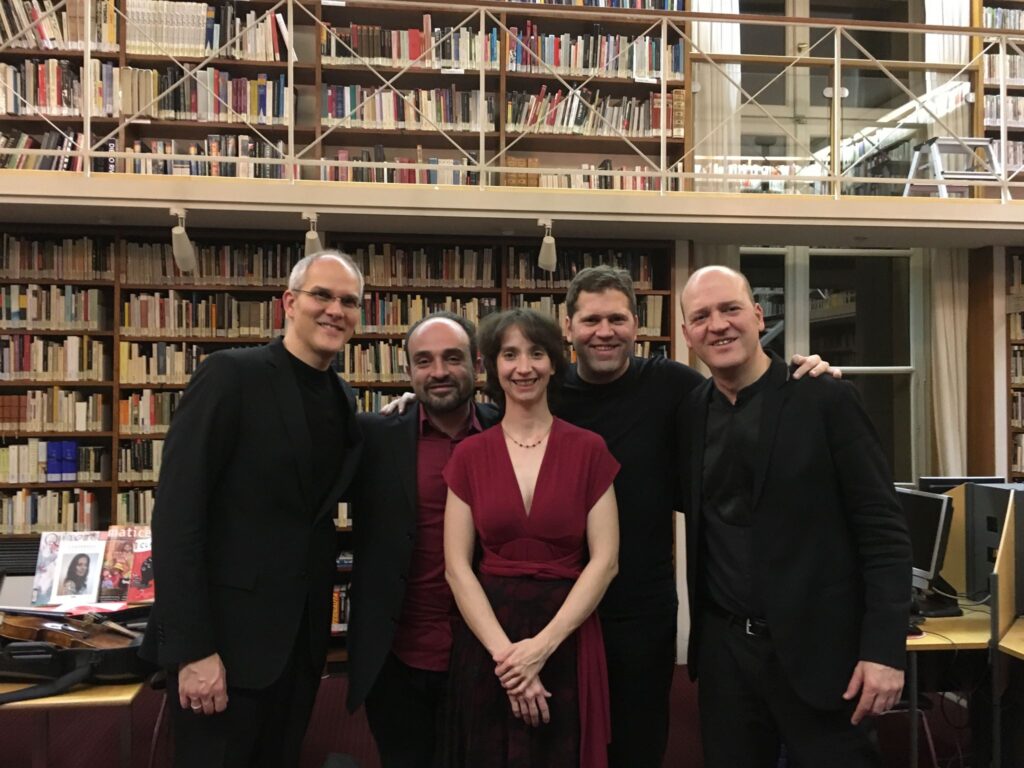
As a classical music composer, I’m neither expected to still be alive nor able to attend performances of my work. But the memories of nearly a decade spent living in one of the world’s most creative cities, coupled with the opportunity to hear Cuarteto Casals perform their program once again, were too compelling to resist. So, I found the perfect excuse to pack my bags and head back to the German Hauptstadt.
When I moved to Berlin in the summer of 2006, fresh from my studies in the USA and amid the exuberance of the FIFA World Cup, I fell in love with the city’s almost naïve sense of freedom. My days were punctuated by sunshine, Radler-bier, and grilled meat.
But everything changed in September 2007, when a major accident drastically altered my life and career. For almost two years, I lost the ability to play the cello and found myself searching for a new direction.
As for most of my career, through a series of fortuitous coincidences (and, I suspect, misunderstandings), I landed an internship at one of Germany’s leading branding agencies, MetaDesign. At the time, Meta’s motto was “visible strategies,” and they had an in-house sound branding team tasked with translating a company’s corporate image into sound. What I learned there proved invaluable when I later realized how to adapt these concepts to the world of classical music.
Sound Identity: A Familiar Concept for Musicians
“But what exactly is a sound (or acoustic) identity?”
Much like a brand’s visual identity, a sound identity revolves around a sound logo—a brief, distinctive motif encapsulating a brand’s essence in about 1.5 seconds. The goal is to create a sound that, when used consistently across touchpoints (customer service hold music, ad jingles, etc.), becomes instantly recognizable, strengthening the brand’s identity.
As a classically trained musician, I found it amusing that this concept was essentially a shorter version of a leitmotif—a technique we know all too well!
Rebranding Beethoven
In 2016, I was one of six composers selected by Cuarteto Casals for their ambitious Beethoven Illuminated Anew cycle. This monumental project features six performances pairing Beethoven’s complete string quartet repertoire with contemporary pieces.
For “my piece”, I was given an enviable level of creative freedom. The only condition? Keep it short (for classical music standards) and base it on the Beethoven quartet assigned to my program. I chose the Op. 74, affectionately known as the Harp Quartet.
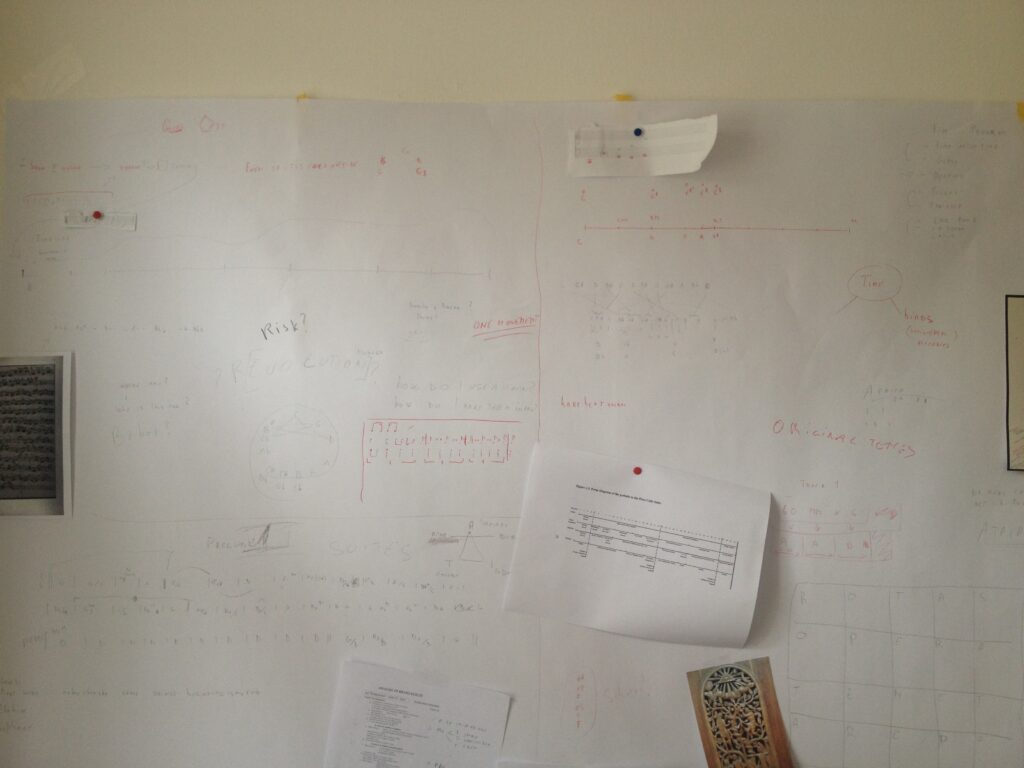
A Composer’s Case Study
- The Client
Cuarteto Casals—one of the world’s most celebrated string quartets. Based in Spain and Catalonia, they were celebrating 20 years of a stellar career filled with accolades. You can learn more about them here. - The Customer
String quartet audiences are a niche yet deeply dedicated group of music lovers. For many, the string quartet is the musical equivalent of a “conversation between four intelligent individuals.” It represents humanity’s timeless quest for a perfect society: one where individuals express themselves freely while allowing others to do the same, all without a conductor. - The Goal
Beyond creating a piece that satisfied both the client and the audience, I saw an opportunity to tackle a broader question:
Can we expand the classical music audience without compromising what makes it special?
In other words, can we sell fine wine without watering it down into light beer under the misguided assumption that “the masses have no taste”?
The Birth of ReSolUtIo
After weeks of pondering, I found inspiration in an unexpected place: the St. John’s Hymn, which gave musical notes their original names. Hidden in its text are the words Re, Sol, Ut, Io.
In Latin, resolutio means both the resolution of a problem and the re-solution—a re-blending of elements into something new. This became the melodic and rhythmic foundation for my piece.
On this foundation, I crafted a whimsical tale: a playful contest between street musicians and Cuarteto Casals, unfolding in a sunny Mediterranean square moments before the quartet takes the stage to perform Beethoven’s Harp Quartet. Iconic Beethoven motifs weave through the piece like bridges between the worlds of the street and the stage, creating a made-up universal language that allows each character to tell their story.
The piece ends as a gentle rain begins to fall, dissolving the music back into blank paper—a clean slate for the next artist to continue the work.
My hope is that ReSolUtIo offers audiences a fresh perspective, not only on Beethoven’s masterwork but also on the person behind the icon. After all, Beethoven’s artistry was never meant to be confined to an elite few.
The Journey Continues
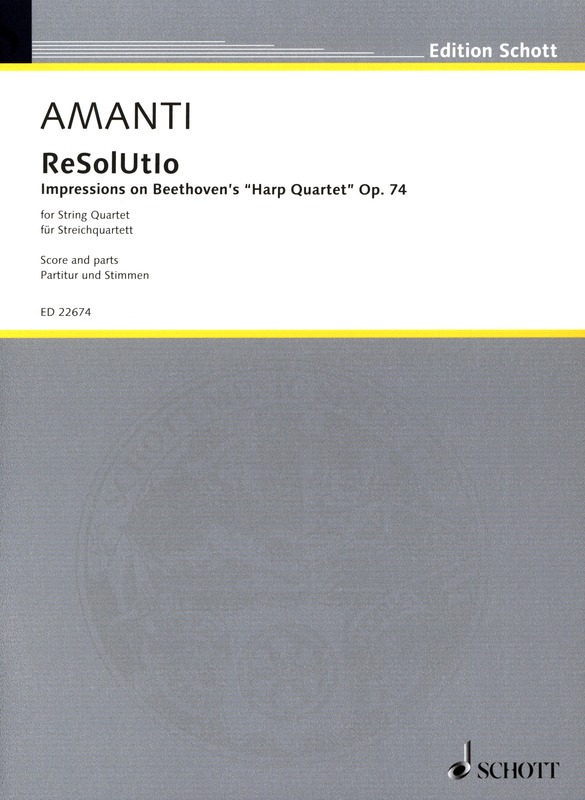
Commissioned by the String Quartet Biennale Amsterdam, ReSolUtIo will be performed at the Philharmonie Berlin’s Kammermusiksaal on May 4th (I’ll be wearing something Star Wars-y!), followed by performances in Turin, Barcelona, London, and more. It will also be published by Schott Music—the same publisher responsible for much of Beethoven’s music—in late 2018.
I hope you enjoy it.
Lucio
years later…
in a basement far far away…
P.s ah the irony, part of the the piece actually eventually became the sound track for the Biennale corporate film I guess I had a point after all 🙂