Jazz, with its emphasis on groove and improvisation, further illuminates this dynamic. A groove is more than a rhythmic device—it is a shared framework that anchors musical freedom. It represents the delicate equilibrium between personal agency and collective identity, which lies at the heart of musical innovation.
Lucio Franco Amanti Tweet
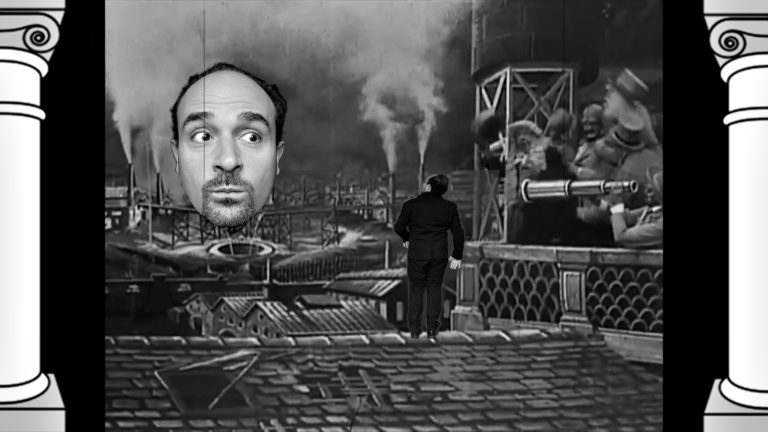
In the beginning was The sound
In the beginning was the “Sound”—resonating vibrations that shape the foundation of our musical world. SOUND, like other fundamental phenomena of life, demands a careful dissection to reveal its true essence. We learn early on that these elements are pitch (the vertical axis of our musical landscape), volume (the force and intensity behind every gesture), and timbre—that evocative German term, “klangfarbe”—the color of sound itself. To these, I would add a fourth: time, or rhythm, the heartbeat of music.
Throughout history, these elements have woven a complex tapestry of musical perception. Bach, for instance, relied on pure notes—impervious to instrumental interpretation, demanding precision over color. By contrast, the post-war avant-garde dared to elevate timbre as a primary vehicle of expression, from Stockhausen’s helicopter escapades to the granular textures of contemporary composers. This paradigm shift has profoundly changed how we define “sound” versus “noise,” revealing a spectrum shaped as much by culture and context as by physics.
This interplay of the fundamental elements prompts a broader question: how do we push the boundaries of tradition while preserving the essence of what we value in music? The 20th century’s embrace of extended techniques and genre-bending experiments offers some answers. It challenges us to welcome unconventional methods, not as novelties but as legitimate pathways to reimagine the expressive potential of familiar instruments.
Jazz, with its emphasis on groove and improvisation, further illuminates this dynamic. A groove is more than a rhythmic device—it is a shared framework that anchors musical freedom. It represents the delicate equilibrium between personal agency and collective identity, which lies at the heart of musical innovation. In this light, improvisation becomes more than a technical skill: it is a philosophical stance. To improvise is to find comfort in the unknown and to participate actively in the unfolding of sound.
For classically trained musicians, improvisation can be especially daunting. The rigorous discipline of the conservatory does not always prepare us for the spontaneity that jazz demands. Yet, when we embrace improvisation—however imperfectly—we begin to transcend the static boundaries of genre. We enter a world where musical ideas transform in real time, shaped by the intuition of the performer and the subtle interplay of the ensemble.
The cultural significance of these explorations cannot be overstated. They highlight the need for music education to foster not only technical excellence but also adaptability and creative curiosity. When young musicians are encouraged to engage with multiple traditions—whether jazz, contemporary experimental forms, or classical masterworks—they are better prepared to thrive in a diverse and unpredictable artistic landscape.
In closing, I advocate for a musical practice that values openness and courage—a practice that resists the temptation of easy definitions and instead revels in the perpetual search for new forms of expression. In this search, the balance between form and freedom, between sound and silence, is constantly recalibrated. It is in this recalibration that we find the vitality of music—and perhaps, of life itself.
Lucio Franco Amanti